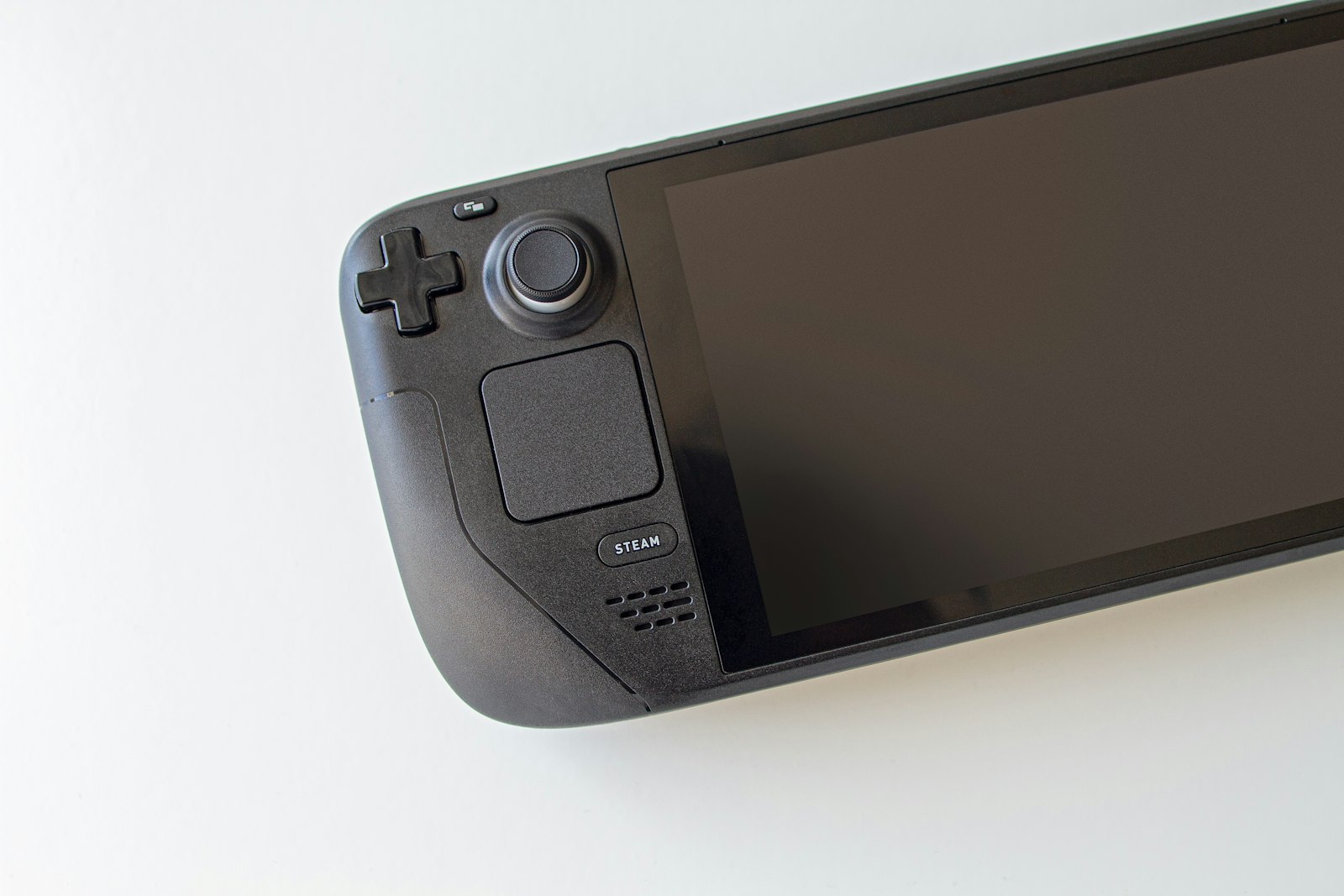
Valve's original Steam Deck proved the handheld PC concept could work at scale, but its LCD screen and mediocre battery life were the two complaints that came up in nearly every conversation about it. The OLED model doesn't reinvent the device — it fixes exactly those two things, and the result is meaningfully better to use every single day.
The screen is the headline, and it delivers
Swapping to OLED isn't a marketing bump — it changes how the device feels to use. Blacks are genuinely black instead of the washed-out gray typical of budget LCD panels, colors are richer without looking oversaturated, and peak brightness is high enough that outdoor use, previously a real weak point, is now comfortable. Pixel art and pre-rendered retro titles in particular look dramatically better, since OLED's per-pixel lighting suits high-contrast, low-resolution art far better than LCD ever could.
Battery life: a real, not marginal, improvement
Valve's more efficient chip (built on a smaller process node) combined with the OLED panel's power characteristics produces a battery life improvement you actually notice in a session, not just on a spec sheet — expect meaningfully longer runtime on the same games at equivalent settings compared to the original model. It's still not going to match a dedicated handheld console optimized purely for battery life over raw power, but the gap closed substantially.
Performance is unchanged, and that's the catch
This is the most important thing to understand before buying: the OLED model does not offer a performance uplift. Frame rates in demanding titles are essentially identical to the original Deck. If your primary motivation is playing more demanding modern titles at higher settings, this refresh won't move that needle — it's a quality-of-life and battery upgrade, not a power upgrade.
Build quality and ergonomics
The chassis runs cooler and the fan is noticeably quieter under load, which matters more than it sounds during long sessions — the original Deck's fan whine was a legitimate annoyance for some users. The controls, thumbsticks, and trackpads carry over unchanged, which is a good thing; they were already a strong point of the original design. It remains a large, somewhat heavy device compared to newer, more compact competitors, and that tradeoff hasn't changed.
Who should buy it
First-time buyers should get the OLED model without hesitation — there's no reason to seek out the older LCD version at this point. Original Deck owners without a specific frustration with screen quality or battery life have a legitimate case to skip this refresh and wait for a genuine performance-generation upgrade instead.
Verdict
The Steam Deck OLED is the version of the Deck Valve should have shipped first, addressing the two most common criticisms without introducing new compromises. It's not a reason to upgrade if you're chasing more raw power, but as a handheld gaming PC to actually live with day to day, it's the clear pick.